





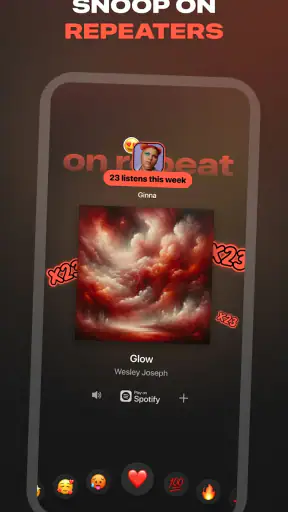
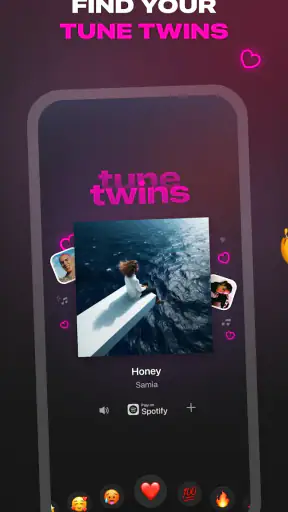
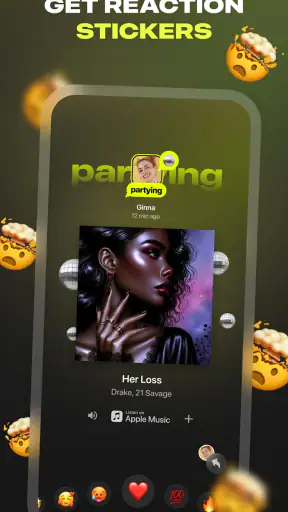


I found Airbuds Widget most useful when I stopped treating it like another music player and started seeing it as a small social window into what my friends are listening to. Developed by Capp Inc., this free Music & Audio app focuses on shared listening activity rather than replacing the streaming service I already use. That distinction matters: its appeal comes from awareness, conversation, and discovery, not from building a new library or controlling every part of playback.
After spending time with it, my main conclusion is simple: Airbuds Widget works best as a lightweight social layer for music. It can make a quiet moment feel more connected, especially when friends have very different tastes. At the same time, anyone looking for a complete music service, detailed audio controls, or a private listening experience may find the concept less useful than expected.
What makes Airbuds Widget different in everyday use
The central idea is visible in its short store description, “Airbuds Widget.” Rather than asking me to open a full app every time I wanted to check activity, the experience is built around seeing listening updates in a convenient place. That makes the app feel closer to a glanceable social tool than a traditional audio app.
In practice, the value depends heavily on whether the people I care about actually use it. When friends are active, a quick look can reveal a song I would never have searched for myself. It also gives me an easy conversation starter: I can ask why someone is playing a particular artist, or return to a track that appeared during a moment when I was not available to listen.
That social context is more interesting than a generic recommendation feed because it comes from people I already know. Streaming services are very good at predicting what I might enjoy from listening history, but their suggestions can feel impersonal. Airbuds Widget adds a human filter. A friend’s unexpected choice can be more persuasive than an algorithmically selected playlist, even when the song is outside my normal habits.
I also like that the app does not need to become the center of my attention. Music apps often encourage long sessions of browsing, queue management, and playlist editing. This one is better suited to quick checks throughout the day. I can see what is happening, decide whether something catches my interest, and continue with whatever I was doing.
A realistic routine with the widget
Imagine a normal workday. I am taking a short break, glance at the widget, and notice that a friend is listening to an old album I have not heard in years. I do not need to send a carefully written message asking for a recommendation; the listening activity itself gives me a reason to start a conversation. Later, I might play the same track in my usual streaming app and mention it when we next talk.
That scenario sounds small, but it explains the app’s strongest quality. Airbuds Widget turns passive music consumption into a low-pressure social signal. It does not require everyone to be online together, and it does not demand a group chat full of messages. The interaction can remain brief, which is useful for friends who want to stay connected without adding another noisy social network to their day.
There is also a practical discovery benefit. When I see music attached to a familiar person, I have more context for judging it. If the friend who usually shares calm instrumental tracks suddenly listens to energetic electronic music, I am more likely to investigate because the choice tells me something about their mood or situation. That kind of personal framing is difficult for a standard “recommended for you” section to reproduce.
Where it sits beside ordinary music apps
Airbuds Widget should not be confused with the usual alternatives in Music & Audio. A streaming service remains the better choice for searching a huge catalog, creating playlists, downloading music for supported offline use, adjusting playback, or managing a personal collection. A messaging app is better when I want a direct conversation. A social network may offer a broader feed, but it can also bury music activity under unrelated posts.
This app occupies a narrower space between those options. It is more personal than an algorithmic recommendation screen and less demanding than a full social feed. I see it as a companion rather than a replacement. Keeping that expectation clear prevents disappointment: installing it will not eliminate the need for a normal music service, because its purpose is to show social listening activity rather than provide the entire listening experience.
The comparison also reveals a trade-off. A streaming service gives me control and consistency; Airbuds Widget gives me spontaneity. The former is ideal when I know exactly what I want. The latter is more rewarding when I want to stumble across something through a friend. I would use both for different reasons instead of choosing one as a universal solution.
Small habits that make it more useful
My first useful tip is to treat the widget as a discovery inbox, not a scoreboard. If I check it with the expectation that it must always show something exciting, it can feel empty during quiet periods. If I use it as a place to collect occasional personal leads, even one interesting song can justify the glance.
A second tip is to follow up selectively. The app becomes more meaningful when I use a listening update as the beginning of a real exchange rather than simply watching activity pass by. I do not need to comment on everything. Choosing one surprising track or one friend whose taste I trust keeps the interaction natural and avoids turning music into another stream that must be constantly monitored.
A third insight is that the app is especially helpful for loose social circles. I may not speak every day with an old classmate, a former coworker, or a friend who lives far away, but seeing a familiar listening choice can maintain a small sense of connection. This is a different kind of utility from messaging: the app can preserve awareness without requiring a reply.
There is a fourth trade-off worth understanding. The more people in my circle who participate, the more varied and useful the activity becomes. With only a very small group, the experience may feel repetitive or quiet. That is not a flaw in the interface so much as a consequence of the app’s social design. Its usefulness grows from the quality and activity of the people connected to me.
What I liked, and where the experience loses momentum
The strongest evidence in favor of Airbuds Widget is how little effort it takes to create a moment of music discovery. I do not have to search through editorial playlists or explain my taste to an algorithm. I simply encounter what people I know are hearing. That feels more personal, and it can lead me toward music I would otherwise overlook.
The app also has a clear identity. Many audio products try to combine streaming, social features, short videos, recommendations, and community tools until the main purpose becomes difficult to understand. Airbuds Widget is easier to describe: it is about friends’ listening activity, presented in a widget-oriented format. That focus makes it approachable for someone who wants a small addition to their routine instead of a major change in how they listen.
I appreciate the low-pressure character as well. There is a difference between sharing a song intentionally and simply letting friends notice what is playing. The latter can feel more spontaneous. It may reveal a side of someone’s taste that they would not think to post, which gives the activity a more natural quality than a carefully prepared recommendation.
The meaningful weakness is equally clear: the app’s value is social, so it cannot be judged independently from the people around me. If my friends do not use it, rarely listen, or have tastes that never interest me, the widget has little to show me. A conventional music service remains useful on its own; this app is more dependent on participation.
That dependence can also create a subtle attention problem. A widget is designed to be visible, and visible updates can encourage frequent checking. For some people, that is harmless. For others, it may become another source of notifications or low-value scrolling. I would recommend keeping the experience intentional: check it when I genuinely want music ideas, not automatically every few minutes.
Another limitation is that social awareness is not the same as full listening control. Seeing a track does not necessarily answer every practical question I might have about finding it, saving it, or organizing it. My regular streaming app is still the place where I handle those tasks. Users expecting Airbuds Widget to function as an all-in-one player should adjust their expectations before installing it.
The free entry point helps make experimentation easy, while in-app purchases ranging from ninety-nine cents to thirty-nine dollars and ninety-nine cents per item mean that some optional elements can involve spending. I would approach those purchases carefully and decide whether the added value fits my own use rather than assuming every extra is necessary for the basic idea to work.
Who should install it
I think Airbuds Widget is a strong fit for people who regularly trade music with friends but do not want another demanding social platform. It is particularly appealing if my circle includes people with different tastes, because variety is what gives the activity its discovery power. Someone who enjoys noticing patterns in friends’ listening habits may also appreciate the quiet, ongoing nature of the experience.
It can suit students, remote workers, and people living away from their usual social group, provided their friends are willing to participate. The app offers a small sense of presence without requiring a scheduled call or a long conversation. For a person who likes the feeling of shared activity while still listening individually, that is a meaningful benefit.
I would also recommend it to listeners who are bored with purely algorithmic recommendations. The app does not need to replace those systems; it adds a different source of curiosity. A friend’s choice can be messy, surprising, or completely outside my profile, and that is precisely why it may lead somewhere new.
On the other hand, I would skip it if I mainly want uninterrupted private listening, advanced playback management, or a large catalog in one place. It is also a weak match for someone whose friends are unlikely to join. In that case, a normal streaming app, a dedicated playlist tool, or direct sharing through a messaging service will probably provide more immediate value.
Parents should also note that the content rating is Everyone, which makes the app broadly accessible from an age-rating perspective. Even so, the social aspect still deserves ordinary personal judgment. Any app that connects people through activity should be used in a way that matches the user’s comfort with sharing and visibility.
Compatibility, support, and daily practicality
The current version is 2.4.6, and the app supports devices running at least version 8.1 of its operating system. That makes it practical for people who are not using the newest phone, although I would still keep the app updated when possible so the widget and connected services have the best chance of behaving consistently.
Because the experience is centered on a widget and social activity, placement matters. I would put it somewhere visible but not in the most distracting position on my home screen. A quick glance is the point; if reaching it requires several steps, the app loses some of its advantage over simply opening a music service or sending a message.
I would also give the app a fair trial period rather than deciding after one empty day. Social tools need time for the right people to join and for useful patterns to appear. However, I would not keep it indefinitely out of habit. If the activity remains inactive after my circle has had a reasonable chance to participate, the practical answer is that this particular tool is not adding enough to my routine.
Its audience size suggests that the concept has found a substantial community: the app has passed one million installs, with an average rating of 4.6 from around fifty-five thousand ratings and about one thousand eight hundred written reviews. Those figures do not guarantee that it will fit my social circle, but they do indicate that the basic idea resonates with many listeners.
What matters most to me is that the app has a recognizable purpose instead of pretending to solve every music problem. Capp Inc. has built something that is easy to understand once I see it as a social companion. The product is at its best when I allow it to remain small: a way to notice, discover, and occasionally connect.
My final verdict is positive, with a clear condition. I would recommend Airbuds Widget to anyone who wants music discovery shaped by real friends rather than only by algorithms, especially when those friends are ready to participate. It adds personality to an otherwise private activity and can create surprisingly natural conversations from very little effort.
I would not recommend it as a replacement for a streaming service, a messaging app, or a personal music library. Its limitations are tied to its narrow purpose, but that narrowness is also its strength. If I want a complete audio toolbox, I should look elsewhere. If I want a glanceable connection to what my friends are hearing, this free app is a thoughtful and enjoyable addition.


